Drugs, alcohol, smoking
LowNo substance use is shown or treated as appealing.
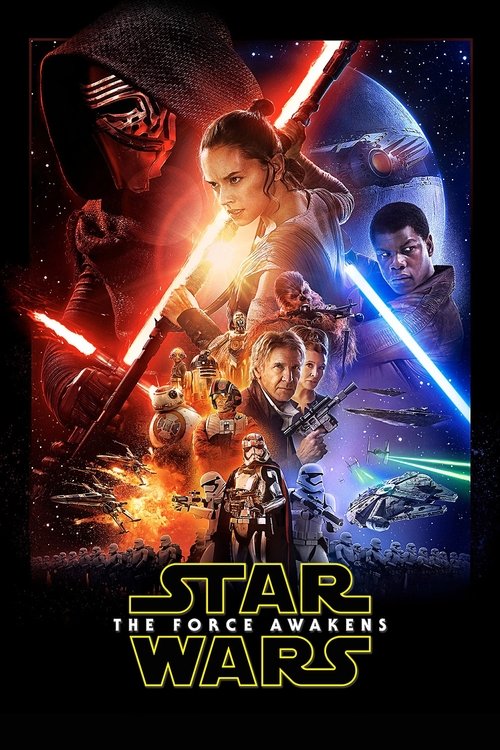
Movie · 2015
The Force Awakens has strong positives: Finn's refusal to participate in oppression, Rey's courage under hardship, and the way unlikely companions help one another resist the First Order. It gives parents good material for discussing conscience, choosing better company, and not letting fear decide your identity.
No substance use is shown or treated as appealing.
Insults or profanity appear and need guidance.
Romance is absent or very limited in the story.
Franchise attachment or consumerism needs guidance.
Violence, peril, or fear may unsettle younger viewers.
Needs careful parent guidance.
Decades after the Empire's fall, the First Order rises from its shadow. Rey, a scavenger on Jakku, meets Finn, a stormtrooper who refuses to participate in slaughter, and together they become tied to a map that may lead to the missing Luke Skywalker.
The protagonists are Rey, Finn, Poe, Han, Leia, Chewbacca, and the Resistance. The antagonists are Kylo Ren, General Hux, Supreme Leader Snoke, and the First Order's Starkiller Base.
Good prevails when Finn refuses evil obedience, Rey begins to act with courage, and the Resistance destroys Starkiller Base. Yet the victory is wounded by Han Solo's murder and Kylo Ren's continuing fall through anger, pride, and rejection of family.
The highest concerns are modern sci-fi violence, emotional death, and Force worldview. Violence includes village massacre, blaster fights, blood-marked helmet imagery, Force interrogation, planetary destruction, lightsaber battles, and Han Solo's death. Romance is low. Language is mild. Substances are low. Merchandising is significant.
Scene and content evidence
Scene and content evidence
Scene and content evidence
Scene and content evidence
Scene and content evidence
Frame it plainly as fiction. Muslims do not believe in an impersonal cosmic power; worship, help, guidance, and ultimate trust belong to Allah alone.
Discuss that obedience to a group, leader, or system is not righteous when it requires ظلم.
Use this to discuss how anger and pride can cut family ties and darken judgement.
Set boundaries around time, purchases, and identity. A story can be enjoyed without becoming a child's main imaginative world.
Use this review to separate useful character lessons from the saga's fictional spiritual framework. The clearest recurring MuslimReview cautions are the Force, destiny/power language, violence, anger, pride, and franchise attachment. The strongest recurring positives are courage, loyalty, resisting oppression, repentance, and protecting others.
Star Wars: Episode VII - The Force Awakens raises the value topic "Courage after fear". This supports a parent discussion about patience through fear, grief, change, disappointment, and difficult duties.
عَجَبًا لأَمْرِ الْمُؤْمِنِ إِنَّ أَمْرَهُ كُلَّهُ خَيْرٌ
How wonderful is the affair of the believer, for his affairs are all good. If something good happens to him, he is thankful, and that is good for him; if something bad happens to him, he is patient, and that is good for him.
Sahih Muslim 2999 Sunnah.com
Star Wars: Episode VII - The Force Awakens raises the value topic "Good companionship". This supports a parent discussion about how friends shape choices, loyalty, courage, and moral direction.
مَثَلُ الْجَلِيسِ الصَّالِحِ وَالسَّوْءِ كَحَامِلِ الْمِسْكِ وَنَافِخِ الْكِيرِ
The example of a good companion and a bad companion is like that of the seller of musk and the blacksmith's bellows.
Sahih al-Bukhari 2101 Sunnah.com
Star Wars: Episode VII - The Force Awakens raises the value topic "Standing against oppression". This supports a parent discussion about resisting oppression, stopping harm, correcting injustice, and using power accountably.
انْصُرْ أَخَاكَ ظَالِمًا أَوْ مَظْلُومًا
Help your brother, whether he is an oppressor or he is oppressed. The people asked how to help an oppressor, and he said: by preventing him from oppressing others.
Sahih al-Bukhari 6952 Sunnah.com
Star Wars: Episode VII - The Force Awakens raises the value topic "Self-control with power". This supports a parent discussion about controlling anger, desire, ego, and instinct before they harm others.
لَيْسَ الشَّدِيدُ بِالصُّرَعَةِ، إِنَّمَا الشَّدِيدُ الَّذِي يَمْلِكُ نَفْسَهُ عِنْدَ الْغَضَبِ
The strong man is not the one who overcomes people by his strength, but the strong man is the one who controls himself while in anger.
Sahih al-Bukhari 6114 Sunnah.com