Drugs, alcohol, smoking
LowNo substance use is shown or treated as appealing.
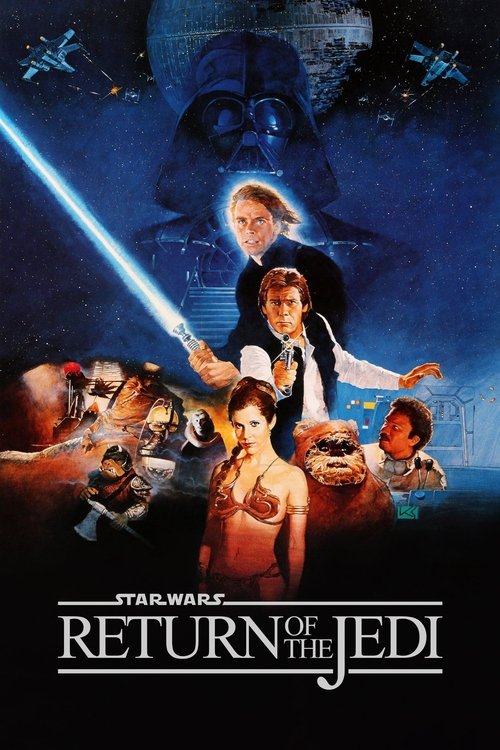
Movie · 1983
Return of the Jedi is more triumphant than The Empire Strikes Back and has strong themes of repentance, mercy, family loyalty, and resisting provocation. Luke's refusal to kill in anger is one of the saga's better moral moments, and Vader's final turn gives families a useful way to discuss returning from wrongdoing.
No substance use is shown or treated as appealing.
Language stays mild with limited rude humour.
Romance or sexual themes need parent guidance.
Franchise attachment or consumerism needs guidance.
Violence, peril, or fear may unsettle younger viewers.
Suitable with guidance after review.
Luke, Leia, Chewbacca, Lando, and the droids first rescue Han Solo from Jabba the Hutt. The larger story then returns to the Rebellion's effort to destroy a second Death Star while Luke prepares to face Darth Vader and the Emperor.
The protagonists are the Rebel heroes, especially Luke as he tries to resist hatred and call his father back from evil. The antagonists are Jabba, the Emperor, Vader while still enslaved to evil, and the Empire's military machine.
Good prevails when Luke refuses the Emperor's temptation, Vader turns back from evil to save his son, and the Rebels destroy the second Death Star. The strongest moral movement is repentance: even a person deeply trapped in wrongdoing can still turn away from tyranny before death.
The highest concerns are Jabba's palace, immodesty, battle violence, and the Emperor's dark spiritual temptation. Romance is mild, but Leia's slave outfit is a modesty concern. Language and substance issues are low. Franchise merchandising remains strong.
Scene and content evidence
Scene and content evidence
Scene and content evidence
Scene and content evidence
Scene and content evidence
Frame it plainly as fiction. Muslims do not believe in an impersonal cosmic power; worship, help, guidance, and ultimate trust belong to Allah alone.
Name this as oppression and immodesty. Do not let the scene become glamour or a joke.
Discuss hope in repentance without erasing the harm a person has done.
Set boundaries around time, purchases, and identity. A story can be enjoyed without becoming a child's main imaginative world.
Use this review to separate useful character lessons from the saga's fictional spiritual framework. The clearest recurring MuslimReview cautions are the Force, destiny/power language, violence, anger, pride, and franchise attachment. The strongest recurring positives are courage, loyalty, resisting oppression, repentance, and protecting others.
Star Wars: Episode VI - Return of the Jedi raises the value topic "Repentance and return". This supports a parent discussion about pride, status, jealousy, admitting fault, and not looking down on others.
الْكِبْرُ بَطَرُ الْحَقِّ وَغَمْطُ النَّاسِ
Arrogance means rejecting the truth and looking down on people.
Sahih Muslim 91a Sunnah.com
Star Wars: Episode VI - Return of the Jedi raises the value topic "Courage with mercy". This supports a parent discussion about patience through fear, grief, change, disappointment, and difficult duties.
عَجَبًا لأَمْرِ الْمُؤْمِنِ إِنَّ أَمْرَهُ كُلَّهُ خَيْرٌ
How wonderful is the affair of the believer, for his affairs are all good. If something good happens to him, he is thankful, and that is good for him; if something bad happens to him, he is patient, and that is good for him.
Sahih Muslim 2999 Sunnah.com
Star Wars: Episode VI - Return of the Jedi raises the value topic "Standing against oppression". This supports a parent discussion about resisting oppression, stopping harm, correcting injustice, and using power accountably.
انْصُرْ أَخَاكَ ظَالِمًا أَوْ مَظْلُومًا
Help your brother, whether he is an oppressor or he is oppressed. The people asked how to help an oppressor, and he said: by preventing him from oppressing others.
Sahih al-Bukhari 6952 Sunnah.com
Star Wars: Episode VI - Return of the Jedi raises the value topic "Good companionship". This supports a parent discussion about how friends shape choices, loyalty, courage, and moral direction.
مَثَلُ الْجَلِيسِ الصَّالِحِ وَالسَّوْءِ كَحَامِلِ الْمِسْكِ وَنَافِخِ الْكِيرِ
The example of a good companion and a bad companion is like that of the seller of musk and the blacksmith's bellows.
Sahih al-Bukhari 2101 Sunnah.com