Drugs, alcohol, smoking
LowNo substance use is shown or treated as appealing.
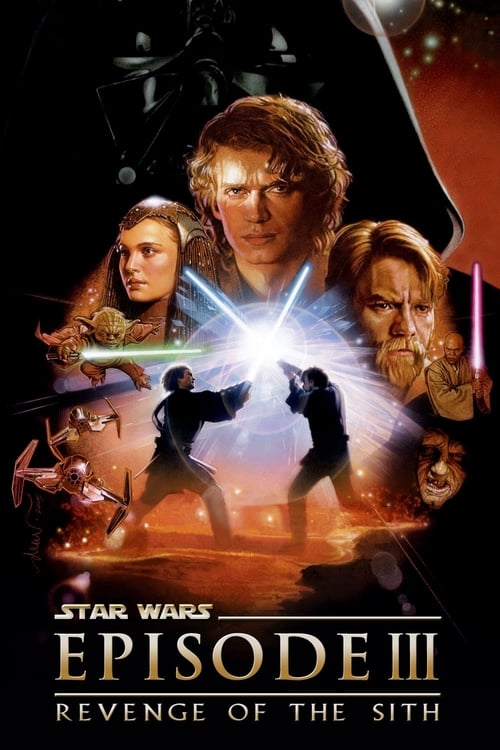
Movie · 2005
Revenge of the Sith is the darkest of the Skywalker films and should not be treated as ordinary family adventure. It is morally useful as a warning: fear, pride, forbidden desire, anger, and obedience to corrupt authority can turn a gifted person into an oppressor.
No substance use is shown or treated as appealing.
Language stays mild with limited rude humour.
Romance or sexual themes need parent guidance.
Franchise attachment or consumerism needs guidance.
Violence, peril, or fear may unsettle younger viewers.
Better avoided for most children.
As the Clone Wars near their end, Anakin Skywalker is praised as a hero but inwardly ruled by fear of losing Padme. Chancellor Palpatine exploits that fear, promising forbidden power and turning Anakin against the Jedi.
The protagonists are Obi-Wan, Padme, Yoda, and the remaining defenders of the Republic. The main antagonist is Palpatine, but Anakin becomes a tragic antagonist as pride, fear, and desire for control pull him into Darth Vader.
Good does not visibly triumph in the ordinary way. The Republic falls, the Jedi are nearly destroyed, and Anakin becomes Vader. Yet the survival of Luke and Leia leaves hope that tyranny and spiritual corruption will not have the final word.
The highest concerns are violence, fear, and dark worldview. Space battles, beheadings, lightsaber duels, Order 66, child murder implication, choking, pregnancy fear, dismemberment, burning, and spiritual corruption are central. Romance is tied to secret marriage and possessive fear. Language and substances are low.
Scene and content evidence
Scene and content evidence
Scene and content evidence
Scene and content evidence
Scene and content evidence
Frame it plainly as fiction. Muslims do not believe in an impersonal cosmic power; worship, help, guidance, and ultimate trust belong to Allah alone.
Discuss tawakkul: grief and fear are real, but trying to control destiny through haram means destroys the soul.
Use this to discuss why obedience is not owed to injustice and why charisma cannot make oppression halal.
Set boundaries around time, purchases, and identity. A story can be enjoyed without becoming a child's main imaginative world.
Use this review to separate useful character lessons from the saga's fictional spiritual framework. The clearest recurring MuslimReview cautions are the Force, destiny/power language, violence, anger, pride, and franchise attachment. The strongest recurring positives are courage, loyalty, resisting oppression, repentance, and protecting others.
Star Wars: Episode III - Revenge of the Sith raises the value topic "Courage against tyranny". This supports a parent discussion about patience through fear, grief, change, disappointment, and difficult duties.
عَجَبًا لأَمْرِ الْمُؤْمِنِ إِنَّ أَمْرَهُ كُلَّهُ خَيْرٌ
How wonderful is the affair of the believer, for his affairs are all good. If something good happens to him, he is thankful, and that is good for him; if something bad happens to him, he is patient, and that is good for him.
Sahih Muslim 2999 Sunnah.com
Star Wars: Episode III - Revenge of the Sith raises the value topic "Standing against oppression". This supports a parent discussion about resisting oppression, stopping harm, correcting injustice, and using power accountably.
انْصُرْ أَخَاكَ ظَالِمًا أَوْ مَظْلُومًا
Help your brother, whether he is an oppressor or he is oppressed. The people asked how to help an oppressor, and he said: by preventing him from oppressing others.
Sahih al-Bukhari 6952 Sunnah.com
Star Wars: Episode III - Revenge of the Sith raises the value topic "Good companionship". This supports a parent discussion about how friends shape choices, loyalty, courage, and moral direction.
مَثَلُ الْجَلِيسِ الصَّالِحِ وَالسَّوْءِ كَحَامِلِ الْمِسْكِ وَنَافِخِ الْكِيرِ
The example of a good companion and a bad companion is like that of the seller of musk and the blacksmith's bellows.
Sahih al-Bukhari 2101 Sunnah.com
Star Wars: Episode III - Revenge of the Sith raises the value topic "Self-control with power". This supports a parent discussion about controlling anger, desire, ego, and instinct before they harm others.
لَيْسَ الشَّدِيدُ بِالصُّرَعَةِ، إِنَّمَا الشَّدِيدُ الَّذِي يَمْلِكُ نَفْسَهُ عِنْدَ الْغَضَبِ
The strong man is not the one who overcomes people by his strength, but the strong man is the one who controls himself while in anger.
Sahih al-Bukhari 6114 Sunnah.com