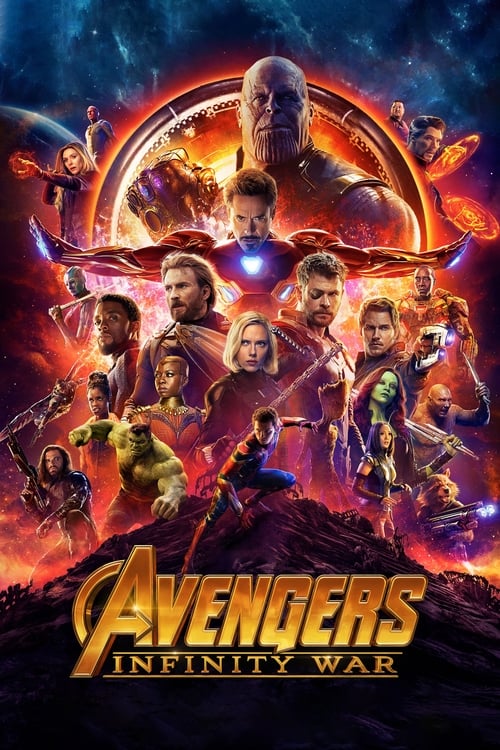
Cover of Avengers: Infinity War

Movie · 2018

Avengers: Infinity War

13+Use caution54% values match

Infinity War is compelling but heavy. It contains strong themes of sacrifice, loyalty, and resistance to tyranny, but it also ends with grief, failure, and mass disappearance. Younger children may find the ending distressing even if they are used to superhero battles.

Global
Teen guidance
AU
M
US
PG-13
UK
12A
Genre
Superhero sci-fi action
Research
Human checked synthesis

Guidance at a glance

Drugs, alcohol, smoking

Low

No substance use is shown or treated as appealing.
Language

Moderate

Insults or profanity appear and need guidance.

Nudity, sex, romance

Mild

Romance or sexual themes need parent guidance.

Products and purchases

Moderate

Franchise attachment or consumerism needs guidance.

Violence and fear

High

Violence, peril, or fear may unsettle younger viewers.

Overall Suitability

54%

Needs careful parent guidance.

Story Overview

Infinity War follows Thanos as he hunts the six Infinity Stones so he can erase half of all living beings. The Avengers, Guardians, Wakandans, and other heroes split across Earth and space to stop him before he gains complete power.

The protagonists are the scattered heroes trying to protect life, especially Vision, Wanda, Iron Man, Doctor Strange, Thor, Captain America, Black Panther, and the Guardians. The antagonist is Thanos, whose calm certainty makes his evil more dangerous because he thinks mass murder is mercy.

Good does not visibly prevail in the ending. The film instead shows what happens when tyranny gains power and when heroes cannot unite quickly enough. Its strongest moral lesson is that utilitarian cruelty can sound rational while still being monstrous.

Content Breakdown

The highest concerns are violence, death, grief, and worldview. Content includes torture-like threat, stabbings, crushing, battlefield injuries, mass combat, major character deaths, and widespread disappearances. Romance is mild. Language is mild to moderate with crude references. Substance concerns are low. Franchise consumerism is moderate.

Drugs, alcohol, smoking

Low · 1/5

Substance content is not a meaningful concern.

Scene and content evidence

  • No drinking, smoking, vaping, or recreational drug use drives the story.
  • The main mature concerns are violence, grief, and worldview.

Language

Moderate · 3/5

Mild-to-moderate profanity, insults, and crude references appear amid action banter.

Scene and content evidence

  • Characters use insults and sarcastic put-downs during conflict.
  • Some crude jokes and stronger mild profanity appear, especially in banter involving the Guardians and Tony Stark.

Nudity, sex, romance

Mild · 2/5

Romance is mild and emotional, not explicit.

Scene and content evidence

  • Wanda and Vision have an affectionate relationship with implied closeness but no sexual scene.
  • Peter Quill's jealousy around Gamora creates romantic tension and comic conflict.
  • Costumes are superhero-stylised and often tight, but the film does not dwell on sexual imagery.

Products and purchases

Moderate · 3/5

The film strongly depends on wider MCU franchise knowledge.

Scene and content evidence

  • The plot pulls together many prior Marvel films and characters, making it hard to watch as a standalone story.
  • The ending encourages immediate interest in the sequel and wider franchise consumption.

Violence and fear

High · 5/5

This is one of the most intense MCU films, with death, torture-like peril, mass combat, and a bleak ending.

Scene and content evidence

  • Thanos kills Loki early in the film while Thor is forced to watch.
  • Thor is restrained and threatened; other characters are choked, stabbed, blasted, crushed, or thrown in combat.
  • Gamora is killed in the Soul Stone sequence, turning a family relationship into a horrific sacrifice.
  • The Wakanda battle includes monsters, blades, explosions, and large-scale battlefield chaos.
  • Thanos tears the Mind Stone from Vision and completes the snap, causing many characters to disappear into dust.

Islamic Values

False gods, mythology, and shirk languageThor, Loki, Asgard, divine titles, and god-language are treated as comic-book mythology. Muslim families should not let the playful tone blur tawhid.High
  • Thanos seeks cosmic stones that grant control over reality, time, space, mind, soul, and power.
  • Thor, Loki, Asgardian survival, Doctor Strange's magic, and cosmic beings frame the story through a fantasy-spiritual universe.
  • The Soul Stone sequence treats death, sacrifice, and cosmic exchange as a mystical bargain.

Explain that these are fictional characters from Norse mythology. Honour, worship, help, unseen power, and lordship belong to Allah alone.

Saving the world, sacrifice, and moral limitsThe films often praise sacrifice and protection, but they also show heroes making reckless, angry, or utilitarian choices.Moderate
  • Vision and Wanda face a terrible choice about destroying the Mind Stone to save others.
  • Doctor Strange surrenders the Time Stone after seeing possible futures, raising questions about foreknowledge and strategy.
  • Several characters risk themselves for friends, planets, and strangers, but grief and anger also lead to costly mistakes.

Praise courage and protecting others, then ask whether the method was just, truthful, and restrained. A good goal does not make every method good.

False mercy and tyrannyThanos presents mass killing as mercy, balance, and necessity.High
  • Thanos believes erasing half of life will save the universe from scarcity.
  • He remains calm and paternal while murdering, torturing, and destroying families.

Teach children to reject beautiful language used to justify oppression. Mercy cannot mean murdering the innocent.

Grief, despair, and emotional heavinessThe ending is bleak and may leave younger children upset or confused.Moderate
  • Many heroes disappear suddenly after Thanos succeeds.
  • Surviving characters are left shocked, grieving, and helpless.

Prepare children for loss themes and remind them that fiction can be intense without becoming our emotional reality.

Franchise attachment and entertainment identityThe films sit inside a large superhero franchise with many spin-offs, shows, toys, games, costumes, collectibles, and online fandom.Mild
  • The story assumes familiarity with a wider cinematic universe and encourages continued viewing across many related titles.
  • Children may move from enjoying one film to wanting the whole franchise, merchandise, games, and character identity.

Set boundaries around time, spending, and emotional attachment. Enjoying a story should not become a child's main identity or imaginative world.

Islamic Values Reflection

Avengers: Infinity War gives families a chance to praise courage, service, and protection while correcting mythology, pride, revenge, and the misuse of power. The key Islamic framing is that strength is an amanah, sacrifice must remain morally bounded, and no created being has divine authority over life, death, destiny, or worship.

Justice

approved

Avengers: Infinity War raises justice as a parent discussion point. This hadith gives the family a concise Islamic anchor for that conversation.

Justice

انْصُرْ أَخَاكَ ظَالِمًا أَوْ مَظْلُومًا

Help your brother, whether he is an oppressor or he is oppressed. The people asked how to help an oppressor, and he said: by preventing him from oppressing others.

Sahih al-Bukhari 6952 Sunnah.com

Patience

approved

Avengers: Infinity War raises patience as a parent discussion point. This hadith gives the family a concise Islamic anchor for that conversation.

Patience

مَا يُصِيبُ الْمُسْلِمَ مِنْ نَصَبٍ وَلاَ وَصَبٍ وَلاَ هَمٍّ وَلاَ حَزَنٍ وَلاَ أَذًى وَلاَ غَمٍّ

No fatigue, disease, sorrow, sadness, hurt, or distress befalls a Muslim, even a thorn prick, except that Allah expiates some of his sins for it.

Sahih al-Bukhari 5641, 5642 Sunnah.com

Positives

Self-sacrificeCourage under lossLoyaltyProtecting creationRejecting tyranny

Family Discussion

  1. Why is Thanos's idea of mercy actually tyranny?
  2. Which sacrifices were noble, and which choices were driven by anger?
  3. How should Muslims think about cosmic stones, magic, and control over life and death?
  4. Would this ending be too heavy for a younger sibling?