Drugs, alcohol, smoking
MildSubstance concerns need clear parent framing.
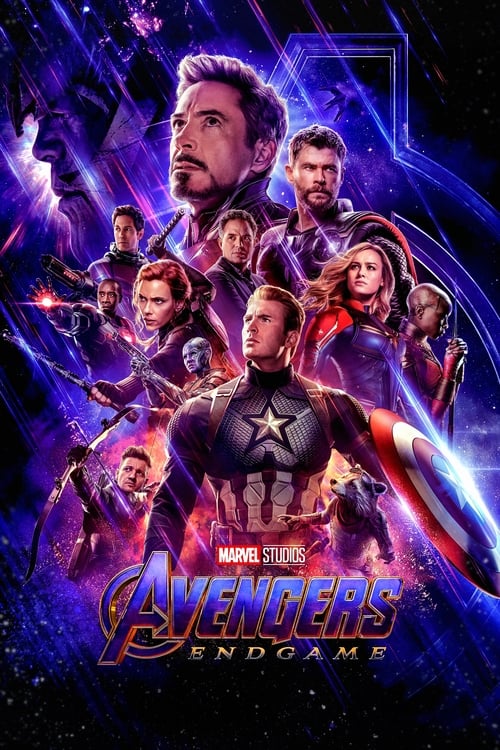
Movie · 2019
Endgame is emotionally stronger than a normal action spectacle. It is about grief, regret, repair, revenge, and sacrifice after catastrophic loss. For teens who already know the MCU, it can open meaningful discussion about perseverance and using power to restore rather than dominate.
Substance concerns need clear parent framing.
Insults or profanity appear and need guidance.
Romance is absent or very limited in the story.
Franchise attachment or consumerism needs guidance.
Violence, peril, or fear may unsettle younger viewers.
Needs careful parent guidance.
Endgame begins after Thanos has erased half of all living beings. The film opens with the loss felt at family level, not only cosmic level: Clint Barton is with his wife and children when they disappear. That gives the catastrophe a personal face before the story returns to the defeated Avengers.
The surviving heroes respond differently. Tony is traumatised and later chooses family life. Steve runs a grief-support group. Natasha keeps trying to hold the team together. Thor collapses into avoidance, drinking, games, and self-mockery. Clint becomes Ronin, a violent vigilante. Scott Lang returns from the quantum realm and gives the team a possible route back through time travel.
The protagonists are the surviving Avengers, especially Tony Stark, Steve Rogers, Natasha Romanoff, Bruce Banner, Thor, Clint Barton, and Scott Lang. The antagonist remains Thanos, though the heroes also fight despair, guilt, revenge, and the temptation to give up.
Good prevails when the heroes persevere through grief, reunite, and sacrifice for the living. The film resolves the Infinity Saga by honouring responsibility, family, courage, and costly service, but it reaches that ending through heavy scenes: Natasha's self-sacrifice, Tony's fatal use of the stones, and the final battle against Thanos's army.
The highest concerns are grief, superhero violence, cosmic/time-travel mythology, revenge, and franchise intensity. Content includes Clint's family vanishing in the opening, worldwide grief after mass loss, Thor killing Thanos by severing his head, Thor's drinking/avoidance as unhealthy grief coping, Clint's Ronin revenge killings, time-travel missions, a struggle between Natasha and Clint over who will die, Natasha falling to her death, a large final battle with armies, monsters, explosions, blades, energy weapons, aircraft fire, and repeated peril, Tony suffering visible injury and dying after using the stones, and some stronger mild language. Romance and sexual content are low; the main sex/nudity concern is form-fitting superhero costumes and a few body/banter jokes rather than sexual scenes. Substance concerns are mild but important because Thor's drinking is connected to depression and avoidance.
Scene and content evidence
Thor's grief drinkingThor's home life includes beer/alcohol around him, gaming, isolation, weight gain, and avoidance of responsibility. The film often uses his condition for comedy, so parents should name the sadness underneath rather than letting children read it only as a joke.Scene and content evidence
Line inventory not completeThe language includes multiple uses of the s-word, plus other mild profanities and insults. Exact individual lines are not logged yet.Banter and name-callingSome rude humour and name-calling appears alongside the action banter.Scene and content evidence
"America's ass" body jokeDuring the 2012 time-heist sequence, Tony criticises Steve's old tight suit. Scott defends Steve by calling attention to his backside, and Steve later sees his past self from behind and says, "That is America's ass."Form-fitting superhero costumesSome superhero suits are tight and body-shaped, which supports a low-level modesty concern without changing the overall rating because the film does not build sexual scenes around it.Skin-tight suit / shirtless noteThere are brief modesty notes around a woman in a skin-tight superhero suit and Thor appearing shirtless. These are scene-specific cautions, not sex or nudity scenes.Scene and content evidence
Franchise payoff structureBecause the ending is designed as a major franchise payoff, children may feel pressure to watch earlier/later MCU titles to understand every reference.Scene and content evidence
Opening family lossClint's wife and children vanish while he is with them, which may be upsetting because it shows family loss directly.Thanos severing and deathThor cuts off Thanos's arm/hand area and later decapitates him after the heroes learn the stones are gone.Heroic deaths and visible injuryNatasha and Clint fight over who will sacrifice themselves; Natasha falls to her death on Vormir. Tony dies after using the stones, with visible burn-like injury and emotional farewells. Hulk's arm is badly injured after using the stones.Final battle detailThe final battle includes armies, monsters, explosions, blades, energy weapons, aircraft fire, and repeated peril.Explain that these are fictional characters from Norse mythology. Honour, worship, help, unseen power, and lordship belong to Allah alone.
Praise courage and protecting others, then ask whether the method was just, truthful, and restrained. A good goal does not make every method good.
Discuss grief honestly: Islam allows sadness, but despair, self-destruction, and revenge are not healing.
Ask children to separate justice from uncontrolled revenge, especially when pain is real.
Set boundaries around time, spending, and emotional attachment. Enjoying a story should not become a child's main identity or imaginative world.
Avengers: Endgame gives families a chance to praise courage, service, and protection while correcting mythology, pride, revenge, and the misuse of power. The key Islamic framing is that strength is an amanah, sacrifice must remain morally bounded, and no created being has divine authority over life, death, destiny, or worship.
Avengers: Endgame raises patience as a parent discussion point. This hadith gives the family a concise Islamic anchor for that conversation.
عَجَبًا لأَمْرِ الْمُؤْمِنِ إِنَّ أَمْرَهُ كُلَّهُ خَيْرٌ
How wonderful is the affair of the believer, for his affairs are all good. If something good happens to him, he is thankful, and that is good for him; if something bad happens to him, he is patient, and that is good for him.
Sahih Muslim 2999 Sunnah.com
Avengers: Endgame raises mercy as a parent discussion point. This hadith gives the family a concise Islamic anchor for that conversation.
مَنْ لاَ يَرْحَمُ النَّاسَ لاَ يَرْحَمُهُ اللَّهُ
Allah will not be merciful to those who are not merciful to mankind.
Sahih al-Bukhari 7376 Sunnah.com